
Home How We Manage About Coaching Contact Schedule a Conversation
Seattle, Washington

Airbnb Management
in Seattle, WA.

Local, full-service Airbnb, VRBO, and short-term rental management for homeowners in Seattle — including the city's primary-residence rule, the two-unit cap, the RRIO inspection step most guides skip, and how to run a fully compliant, profitable rental inside all of it.

Get My Free Property Report → See how we manage →
We'll email you real numbers for your address · No contracts · No pressure
The market
One city, a dozen
different markets.

Seattle isn't one short-term rental market — it's a dozen small ones stitched together, and that's exactly why it's the most resilient market we serve. A unit near Pike Place Market and the downtown waterfront lives or dies on tourism and the cruise season; a unit near South Lake Union or the stadium district fills up on Amazon relocations, conventions at the Washington State Convention Center, and Seahawks, Mariners, Sounders, or Kraken game nights; a unit near the University of Washington fills on parent weekends, graduation, and Husky football Saturdays that have nothing to do with any of the above. Very few cities let an owner pick which kind of demand they want to be exposed to just by choosing a neighborhood.

That diversity comes at a real cost, though: Seattle also runs the strictest short-term rental ordinance of any city we serve. Unlike Kirkland's occupancy-tier system, Seattle doesn't sort properties into tiers — it draws one hard line. An operator may run short-term rentals in at most two dwelling units citywide, and one of those two has to be the operator's actual primary residence. There's no version of Seattle STR compliance that skips that rule, which is exactly why we walk every Seattle owner through it before they spend a dollar on furniture.

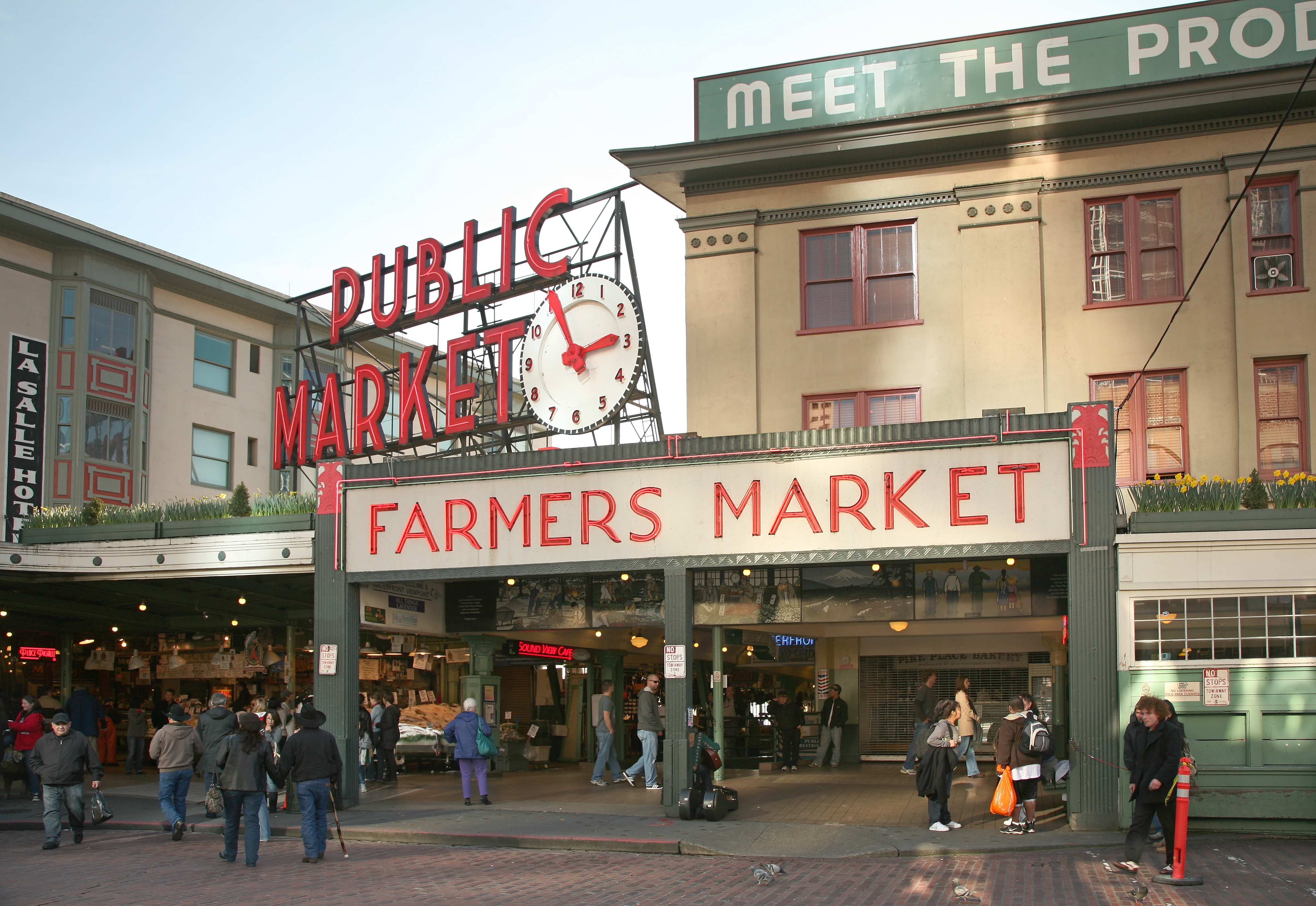
Pike Place Market in downtown Seattle, Washington, with the iconic red sign and market stalls
Why guests book here
Demand that doesn't
depend on one thing.
Pike Place Market & the waterfront
One of the most-visited public markets in the country, steps from the Seattle Aquarium and the downtown cruise terminals — the anchor of Seattle's tourist economy.
Amazon, Microsoft & Big Tech
Amazon's South Lake Union headquarters, Microsoft's satellite offices, and Google, Meta, and dozens of startups keep business travel and corporate relocations flowing year-round.
Cruise season
Seattle is the #1 embarkation port for Alaska cruises — a predictable, high-occupancy demand spike roughly May through September every year.
Pro sports, four teams deep
Seahawks and Sounders at Lumen Field, Mariners at T-Mobile Park, and the Kraken at Climate Pledge Arena — reliable weekend demand spikes stacked across football, baseball, soccer, and hockey seasons.
Washington State Convention Center
A steady calendar of large conventions and conferences downtown that hotels alone can't absorb, especially during overlapping event weekends.
University of Washington
Parent weekends, graduation, and Husky Stadium football Saturdays create a demand pattern entirely separate from the downtown tourist calendar.
Seattle Center & the Space Needle
The Space Needle, Chihuly Garden and Glass, MoPOP, and the Pacific Science Center anchor a second tourist cluster north of downtown, distinct from Pike Place.
2026 FIFA World Cup
Seattle is a confirmed host city, with matches at Lumen Field — a once-in-a-generation demand spike layered on top of the normal summer season.
It's not one market
Same city, different
guest entirely.

The single biggest mistake we see is pricing and staging a Seattle unit like it could be anywhere in the city. Where it sits changes who books it.

Capitol Hill
Seattle's nightlife and dining core, with the city's largest LGBTQ+ community and a dense walkable strip of bars and restaurants. Books on nights out and weekend trips, not families.
Ballard
A working fishing fleet, a Sunday farmers market, and one of the highest concentrations of breweries in the city — draws a slower, more design-conscious traveler than downtown.
Fremont
Self-styled "Center of the Universe," home to the Fremont Troll and a Sunday market — quirky, walkable, and a magnet for repeat visitors who've already done downtown once.
Downtown & Belltown
The waterfront, the convention center, and the cruise terminals — this is where business travel, conventions, and tourist-season demand overlap most directly.
Queen Anne
Some of the best skyline views in the city and immediate proximity to Seattle Center — a favorite for guests visiting for a show, a game, or the Space Needle.
West Seattle & Alki Beach
The closest thing Seattle has to a beach town, across the water from downtown — a quieter, more residential draw for longer family stays.
The rules
Can you legally run an
Airbnb in Seattle?

Yes — but Seattle runs the strictest short-term-rental ordinance of any city we serve (SMC Chapter 6.600, in effect since 2019), and it's built around a hard cap, not a sliding scale.

Two units, one of them your real home.

Every operator in Seattle is capped at two short-term rental dwelling units, citywide, no matter how many properties they own. One of those two must be the operator's actual primary residence — the place they live more than half the year, evidenced by things like their driver's license, voter registration, and lease or mortgage. The second unit can be anything from a detached ADU to a separate house, but running a third, fourth, or fifth STR unit as an individual operator isn't permitted under the current ordinance. A narrow set of units legally operating before September 2017 carry limited grandfathered exceptions. We confirm exactly where your property sits before you spend a dollar.

Business license
A Seattle business license tax certificate, plus registration with the Department of Finance and Administrative Services' Short-Term Rental Unit. No separate STR fee here, but gross receipts are subject to Washington's B&O tax. We handle the registration.
STR Operator's License
A Short-Term Rental Operator's License at $75 per unit, per year, from the Seattle Services Portal. The license number must be posted on every listing in the exact format STR-OPLI-##-###### — platforms can and do pull listings that get the format wrong.
RRIO registration
Any unit that isn't your owner-occupied primary residence needs a Rental Registration and Inspection Ordinance (RRIO) registration: $126 for the first unit + $31.50 per additional unit, valid two years, with a safety inspection likely at some point in the first five years on the registry.
Taxes
Washington's combined state/local rate of roughly 10.4% applies to lodging, plus King County's 2.8% Convention and Trade Center Tax on stays under 30 nights. Seattle's own separate city STR tax was repealed in 2018 and hasn't been reinstated. Remittance is the owner's responsibility — we handle it.

Last reviewed July 2026 against the City of Seattle's official Short-Term Rentals and RRIO pages and SMC Chapter 6.600 ordinance text. We also reviewed an older short-term-rental guide from an earlier version of this site (published 2023) — several of its numbers had already gone stale, including the RRIO fee and inspection cycle, which is exactly why we re-verify every regulation directly with the city rather than relying on our own past write-ups. This is a summary of our research, not legal advice; we confirm current requirements directly with the city as part of onboarding. Primary sources: City of Seattle — Short-Term Rentals, Seattle RRIO, and SMC Chapter 6.600.

01
Business license tax certificate
Register with Seattle's Department of Finance and Administrative Services and get your business license tax certificate through FileLocal. If you already hold one from another Seattle rental, this step is already done.
02
RRIO registration (secondary unit only)
If the unit isn't your owner-occupied primary residence, register it on the Seattle Services Portal under RRIO, using your King County parcel number. Budget for a possible safety inspection sometime in the first five years.
03
Short-Term Rental Operator's License
Apply for the operator's license on the same portal — $75 per unit, valid one year. Once issued, the license number goes in the exact format STR-OPLI-##-###### on every listing.
What can it earn?
How much are youmissing?

Seattle's demand is spread across a dozen neighborhoods that barely resemble each other — which means a generic city-wide estimate is close to useless. We won't invent a figure for you — get a free report with real comparable listings for your exact address.

Built around Seattle's two-unit rule
We confirm compliance
before we touch pricing.

Before we run a single comp or write a single line of listing copy, we confirm which of your properties counts as your primary residence and whether a second unit actually clears Seattle's two-unit cap. From there we handle the business license registration, RRIO registration if your unit needs it, and the Operator's License application — then get the license number correctly formatted and posted on every platform before you take a single booking.

If a property doesn't clear the primary-residence test or would put you over the two-unit limit, we'll tell you honestly on the call rather than sign you up for a listing that gets pulled the moment a platform checks your license number.

See exactly what's included →
Common questions
Seattle STR, answered.
Is Airbnb legal in Seattle, WA?+
Yes, but Seattle regulates it more tightly than almost any other city we serve (SMC Chapter 6.600, in effect since 2019). The core rule: an operator may run short-term rentals in a maximum of two dwelling units citywide, and one of those two must be their primary residence — the place they actually live more than half the year. A small number of units legally operating before September 2017 have limited grandfathered exceptions.
Can I short-term rent a second property I don't live in, in Seattle?+
Only if it's your one allowed secondary unit. Seattle caps every operator at two short-term rental units total, and one of the two must be the operator's primary residence. A detached ADU or an in-law apartment can count as the primary unit if you actually live in it, but it still counts toward the two-unit limit. You cannot operate three or more STRs as an individual operator under current rules.
What licenses do I need to run a short-term rental in Seattle?+
Three things: a Seattle business license tax certificate (and registration with the Department of Finance and Administrative Services' Short-Term Rental Unit), an RRIO (Rental Registration and Inspection Ordinance) registration for any unit that isn't your owner-occupied primary residence, and a Short-Term Rental Operator's License at $75 per unit per year. We handle all three during onboarding.
What is RRIO and does it apply to my Airbnb?+
RRIO is Seattle's Rental Registration and Inspection Ordinance, and it applies to any short-term rental unit that is not owner-occupied — your secondary STR unit, in most cases. Registration currently runs $126 for the first unit plus $31.50 per additional unit, valid for two years. Properties are selected for a safety inspection at some point in their first five years on the registry, with roughly a 10% chance of a second inspection in the following five years. Your owner-occupied primary residence is generally exempt.
How much does a Seattle short-term rental license cost?+
The STR Operator's License itself is $75 per unit per year. On top of that, budget for the Seattle business license tax certificate (no separate STR fee, but B&O tax applies to gross receipts) and, for any non-owner-occupied unit, RRIO registration at $126 for the first unit plus $31.50 per additional unit every two years. Total first-year cost for a typical single secondary-unit operator runs a few hundred dollars, not thousands.
Do I have to post my Seattle STR license number on my listing?+
Yes. The city requires every listing — on Airbnb, VRBO, Expedia, or any other platform — to display the operator's license number in the exact format STR-OPLI-##-######. Platforms can and do remove listings that display the number incorrectly or omit it entirely, so this is one of the easier compliance items to get wrong by accident.
How much can a Seattle short-term rental earn?+
More than most owners realize — but the honest answer depends heavily on neighborhood, unit type, and whether it clears the primary-residence/two-unit test at all. Seattle's demand is unusually diverse: business travel, conventions, cruise-season tourism, University of Washington visitors, and major sporting and concert events all pull differently by neighborhood. Get a free property report for real comparable listings at your exact address before assuming anything.
We also serve nearby
Bellevue Kirkland Redmond Issaquah

Own a home in Seattle?

Get a free property report emailed to you — real comparable listings, an honest read on whether it clears the primary-residence and two-unit rules, and what it'd take to get started. No pressure, no payment.
Get My Free Property Report →